



 "Each investment is a risk," and Chinese factories are experiencing "significant losses" by manufacturing in Southeast Asian countries subjected to Trump's tariffs, as reported by industry experts.
Chinese exporters, such as Huang Yongxing, are seeking clear responses to begin producing and delivering products from their factories located in China or Southeast Asia.
And the responses— or at least the updates— that Huang receives, he posts on his social media account through weekly updates that have become popular among owners of small and medium-sized businesses as unpredictable and changing tariff policies from Washington keep reshaping the profit margins for manufacturers.
They are now confronted with a long-term challenge regarding investments, as some of their international factories are facing the threat of US President Donald Trump's "reciprocal"tariffs as high as 40 percent on 14 nations, many of which are key markets for Chinese exports.
Are you curious about the most significant issues and developments happening globally? Find the information you need withSCMP Knowledge, our latest platform featuring curated content including explainers, FAQs, analyses, and infographics, presented by our acclaimed team.
Trump's action, revealed on Monday, places Southeast Asia—China's biggest export market—within Washington's trade focus, simultaneously impacting Chinese exporters' transshipment plans across the region.
Uncertainty surrounds the U.S. approach to transshipment, as high tariffs are hinted at without clear implementation plans, causing significant concerns for Chinese investors looking to invest abroad.
In reply, numerous Chinese firms—those that have already gone global and others intending to expand internationally—have had limited choice but to proceed cautiously.
Huang, a lighting product exporter located in Zhejiang province, has had to frequently adjust its plans to establish a factory in Cambodia because of the changing trade policies under Trump in recent months.
"Customers were urging me to establish production in Southeast Asia, but this involves double costs—maintaining my Chinese factory while investing in a new one," he mentioned in a recent video shared on WeChat, China's widely used messaging application.
Due to underdeveloped local supply chains, it will require at least two years to acquire new clients. The actual cost would be twice as high, yet there would be only a single source of revenue.
Six of the 10 Association of Southeast Asian Nations members are impacted, with Cambodia, Thailand, Indonesia, Laos, and Myanmar encountering tariffs between 25 to 40 percent. Among these, Laos and Myanmar would face the highest tariffs at 40 percent, making the cost increase render Chinese companies' method of re-exporting to the US through these nations almost ineffective.
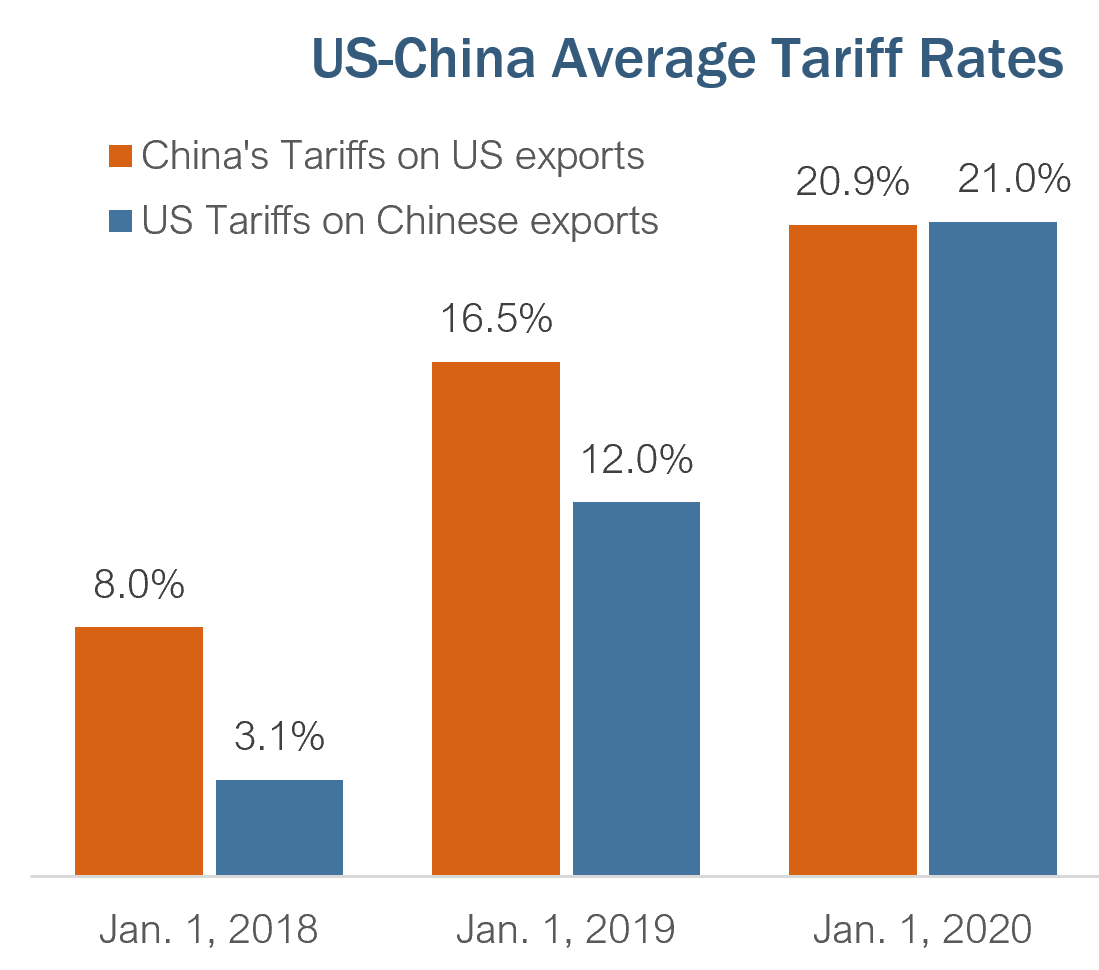
Influenced by years of increasing trade measures and policy changes, the current weighted average tariff on Chinese imports is estimated at 42 per cent, as reported by Morgan Stanley. UBS estimates the rate at43.5 per cent.
No matter what decision you make, it always seems incorrect," said another lighting supplier, Levi Tan, from Guangdong province. "Those individuals who have already constructed factories are unable to sleep at night.
Industry experts have cautioned that, although the "going global" trend remains strong, increasing uncertainty about tariffs is quickly reducing the strategic options available to Chinese exporters.
"Without consistent expectations, each investment becomes a risk," noted supply-chain expert Liu Kaiming, who has experience with rerouting models.
Cambodia currently possesses a relatively comprehensive industrial chain specifically in the garment sector, while Laos and Myanmar only have isolated factories," Liu explained. "If they are placed on the high-tariff list, re-exports from Laos and Myanmar would become nearly impossible, and Chinese factories operating there will certainly face significant losses.
Liu stated that he is convinced Southeast Asia will remain a crucial factor in reshaping China's supply chain, although he noted that the process is turning out to be significantly more challenging than many companies had originally anticipated.
From enhancing production capabilities to raising capital, all expenses are increasing," Liu stated. "Trump's policy changes happen so often that many business owners feel as if whatever they do is the wrong decision.
Hardware exporter Kevin Huang from Guangdong shared similar worries, pointing out how ongoing modifications in US tariff regulations are increasing immediate risks. "Some of my colleagues have just completed establishing their factories but are now experiencing cash-flow difficulties," he mentioned.
With his American clients "experiencing losses and postponing payments," Huang stated: "I'm afraid to keep shipping right now, and all I can do is get ready to handle the bad debt."
Some local producers, however, perceive an unforeseen benefit.
"If Southeast Asia faces tariffs, we could potentially gain a competitive advantage," stated Wang Shui, a pet product manufacturer based in Guangdong.
We don't fear tariffs. Provided we can offer high-quality items, customers will continue to place their orders. Numerous products are beyond the production capabilities of Southeast Asia.
Nevertheless, Wang recognized that the overall trade situation was becoming more unstable.
Whether remaining in China or venturing overseas, manufacturers are encountering extraordinary uncertainty," he expressed. "As US policies change constantly, no one can predict what will come next.
More Articles from SCMP
Why the 'Hermès' and 'Chanel' of Chinese lychees are so highly desired
It's time for companies to cease benefiting from Israel's 'economy of genocide'
Award-winning data scientist She Yiyuan returns to China for a new position after many years in the United States.
Style Edit: Richard Mille introduces the exclusive RM 30-01 Le Mans Classic to celebrate the historic car race that inspired its name.
This piece was first published in the South China Morning Post (www.scmp.com), a top news outlet covering China and Asia.
Copyright (c) 2025. South China Morning Post Publishers Ltd. All rights reserved.



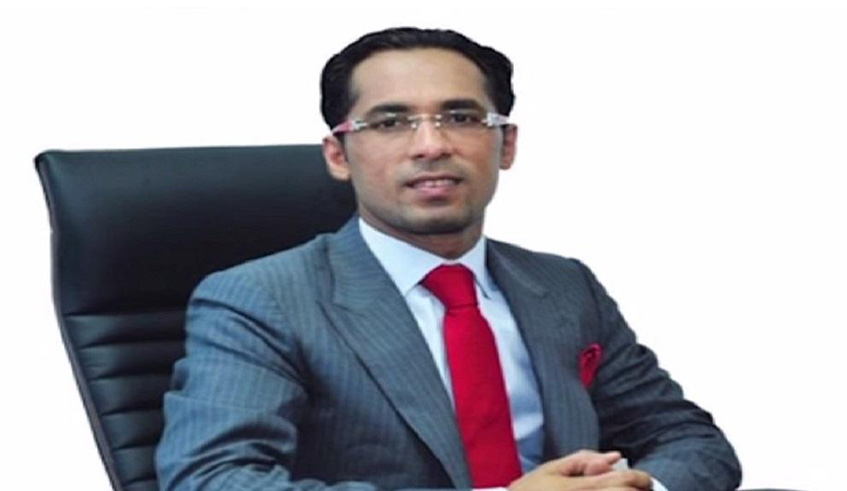 Dar es Salaam. Tanzania is being encouraged to implement deliberate economic policies aimed at creating dollar billionaires and enhancing its global economic influence. According to a new wealth report, the country currently has only one dollar billionaire and a limited number of high-net-worth individuals. The Africa Wealth Report 2023 indicates that Tanzania has 2,400 individuals with a net worth exceeding $1 million. Out of these, only six have assets above $100 million, while the country has just one billionaire despite being the second-largest economy in East Africa. Also read: 435 Tanzanians join the billionaires' club - The Citizen Tanzania While the number of millionaires has risen by 20 percent over the past decade, economists believe this figure could be much higher if the country had strategic policies to support fast-growing local investors capable of expanding into international markets. "The government could significantly boost some of our wealthy entrepreneurs by matching or even partially matching their capital. That alone could reduce our reliance on imports," said Dar es Salaam-based entrepreneur Amina Salum. Experts cite the United States and China as examples of countries that have used state support to create global economic powerhouses. In 2024 alone, the US government allocated over $180 billion in subsidies to domestic companies. Firms such as Boeing, Intel, Amazon and Tesla have benefited from subsidies, tax exemptions and government-backed loans to support research, manufacturing and exports. Such policies have enabled the US to remain a global tech leader, create millions of jobs and use multinational corporations as ambassadors of national influence. China, through institutions like the China Development Bank, has extended low-interest loans and subsidies to companies such as CCCC and China Railway Engineering Corporation, enabling them to execute infrastructure projects across Africa and Asia. Backed by their government, these companies have expanded aggressively, securing contracts in many countries, strengthening China’s global economic influence. Level playing field no longer enough Tanzania has long promoted a “level playing field” approach for all businesses. But analysts say this neutral policy risks holding back local firms with the potential to create wealth and export influence. "Tanzania needs a strategy to support businesses that have proven capacity to create jobs, grow exports and increase tax revenues," said Prof Abel Kinyondo, an economist at the University of Dar es Salaam. He said targeted support could include direct financial subsidies, time-limited tax relief to reduce operating costs and credit guarantees to help companies access large-scale capital. "Strategic preferential treatment works. Ethiopia is already applying it in aviation. Their national airline is now among the best in Africa because it enjoys specific government support," he said. Prof Kinyondo emphasized the need for strong oversight and transparency, saying only experienced, high-performing entrepreneurs should be considered for such support. Another economist, Prof Dickson Pastory of the College of Business Education, said empowering local investors can also enhance national security by reducing dependency on external suppliers for essential goods. "For crucial sectors, supporting domestic production guarantees supply. It also improves Tanzania’s competitiveness in the global economy," he said. While financial subsidies may be challenging for developing countries, Prof Pastory said tax exemptions could achieve similar results. "Reducing tax burdens allows businesses to expand and create more jobs, ultimately boosting national GDP," he noted. BoT support mechanisms already in place The Bank of Tanzania (BoT) has on several occasions expressed willingness to support local businesses through the Export Credit Guarantee Scheme (ECGS) and the SME Credit Guarantee Scheme (SME-CGS). These aim to help private-sector players with bankable projects access financing even when they lack sufficient collateral. In June 2023, at the height of the dollar shortage, BoT governor Emmanuel Tutuba said the central bank had taken steps to encourage domestic production and promote import substitution. He said the BoT board had visited several strategic sites to assess opportunities to boost exports and foreign exchange earnings. "We wanted to know what investors need to scale up production and exports, especially in terms of financial support." Provided by SyndiGate Media Inc. (Syndigate.info).
 Artificial intelligence is set to become "a key driver for China's modernization," according to Huachuang Securities, aligning with the positive perspective of Morgan Stanley, UBS, and other institutions.